Firm and radiant skin, along with thick and healthy hair, express external beauty, self-satisfaction, and confidence.
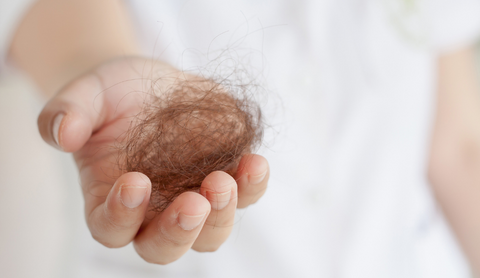
Life offers a unique scenario to each individual, and in this context, the most bothersome one is where hair loss and thinning take center stage. Responsibility for this very unpleasant condition can be attributed to genetics, lifestyle, and our general health. When excessively shed hair appears on the comb or brush, strange and unpleasant feelings overcome us. Don't let the unpleasant sight on the comb frighten you too much.
It is entirely normal, however, for this unpleasant condition to lead us to ask how long it takes for hair to grow back?
In this blog, we will try to introduce you to some new findings in the field of hair dermatology, hair growth, scalp health, and general medical conditions related to hair loss as their significant and very unpleasant side effect.
How does hair grow?

Hair growth begins from the hair follicle on the scalp and skin. It receives essential nutrients from the bloodstream, which nourishes the hair follicle, triggering hair growth. Hair growth occurs in three stages: anagen, catagen, and telogen, while the fourth stage, exogen, is the final stage in the hair's life cycle, where older, shed hairs are replaced by new ones. Under normal conditions, the process of hair growth and shedding is an entirely natural cycle of hair's lifespan.
In physically healthy individuals, under normal conditions, hair grows about an inch and a quarter (1.27 cm) per month. Growth varies among individuals and is influenced by genetic factors, age, hair color, gender, climate, and race.
For most, hair growth occurs naturally without the need for products to accelerate hair growth. Others use products for hair growth and strengthening, of which there are already several on the market due to the discovery of effective raw materials.
How long does it take for hair to grow back?
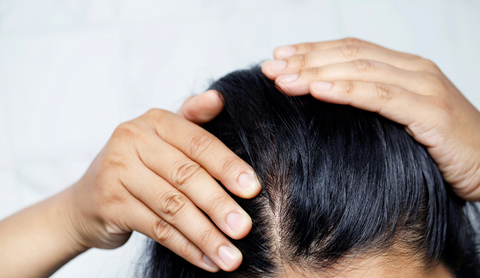
On a healthy scalp, hair growth and shedding are completely normal daily processes. The scalp and hair growth regenerate at different times for individuals. However, if hair loss is due to dead hair follicles, hair growth is no longer possible. Let's look at some information about hair regrowth as a result of various invasive factors.
Hair regrowth after cutting
Long hair is quite susceptible to various damages. The most effective method for addressing problems with split and damaged hair ends is cutting. The American Academy of Dermatology states that in a healthy person, hair grows an average of 1.27 centimeters per month.
If your hair was cut by 15 centimeters at the salon, it will take approximately one year for your hair to grow back to its original length.
These numbers are not absolute and vary between sexes. Researchers have even proven that men's hair grows faster.
After chemotherapy
The biggest nightmare, especially for women, is related to hair loss as a consequence of aggressive treatment for malignant diseases. Hair loss after chemotherapy is a common negative side effect in oncology patients. Although less invasive biological drug treatments already exist, many oncology patients are still undergoing more aggressive forms of treatment that cause hair loss. In these cases, hair follicles do not die, and usually, the first fuzz appears within three months after the completion of chemotherapy.
Hair growth after chemotherapy is initially slow, but after a few months, it returns to its pre-illness state, meaning about one and a quarter centimeters per month, as already mentioned.
Male pattern baldness
Male pattern baldness usually significantly affects male self-confidence. It is also called hair loss in a male pattern. It is a normal physiological process caused by hereditary hair loss after the age of forty, and in some cases even earlier. In this case, we are talking about permanent hair loss and after the affected baldness, hair no longer grows.
Find out if you have early signs of baldness
Male pattern baldness is characterized by the permanent destruction of hair follicles. However, there are ways that can somewhat alleviate the problem or postpone it to a later period.

How to help with baldness
There are FDA-approved drugs (finasteride and minoxidil) available on the market for treating or preventing male pattern baldness.
Finasteride interacts with the hormone testosterone, which is responsible for baldness. The enzyme finasteride, better known in the industry as a 5-alpha reductase inhibitor, blocks the conversion of testosterone to dihydrotestosterone, a male sex hormone that causes hair loss in genetically predisposed baldness. The drug can be purchased without a prescription, but consult your doctor before buying, as possible negative side effects include: breast enlargement, rashes, decreased libido, and lower sperm count. The drug is not suitable for women, nor is its use advised for patients with chronic inflammation or kidney disease, liver disease, and prostate cancer.
Hair transplantation
In addressing male pattern baldness, hair transplantation has recently become an extremely popular aesthetic procedure. Dead hair follicles are replaced with hair follicles from the back of the head. Hair transplantation is considered one of the most effective methods for eliminating baldness. It is a minimally invasive surgical method.
After hormonal imbalances
Hair growth is directly dependent on hormones such as testosterone, progesterone, and estrogen. Many experience greater physiological hair loss when there is an increased secretion of testosterone in the body.
We usually talk about completely natural endocrinological processes, and once the body successfully re-establishes hormonal balance, conditions for normal, healthy hair growth are restored.
The content of hormones is directly related to age; for example, in menopausal women, the content of estrogen and progesterone hormones decreases, while the content of testosterone remains the same. During this period of life, women often experience accelerated hair loss and thinning of the scalp.
Dermatological problems
Hair loss is a common consequence of many dermatological disorders. Most often, microorganisms that attack the hair follicle on the scalp are responsible.
Alopecia areata, scalp psoriasis, and fungal infections of the hair are the most common dermatological pathologies associated with hair thinning on the scalp.
New hair on the scalp only begins to grow back after the pathology has been treated with medication. In some cases, there is even a possibility of permanent damage to the scalp, resulting in the death of hair follicles.
Ideally, normal hair growth is re-established approximately one week after the disease is cured.
After shaving
Especially among men who shave regularly, we see that shaving has no negative impact on the growth of facial hair, nor does it affect the death of hair follicles. Removing or shaving the scalp has no negative effects on the ability to re-establish normal hair growth. Hair follicles are usually capable of complete regeneration and re-establishment of normal hair growth within about two weeks after shaving the scalp.
Other medical conditions
Thyroid dysfunction and diabetes are also closely linked to hair loss. However, the positive aspect of thyroid dysfunction is that with successful treatment of the disorder, relatively normal hair growth is re-established.
Even after radiation therapy, in most cases, conditions for normal hair growth are re-established on the scalp.
In all these cases, hair growth is initially somewhat slowed down, but it normalizes over time.
Conclusion
As we stated at the beginning, hair growth depends on age, genetics, and the cause that led to hair loss. We also answered some of the most common questions related to hair loss and growth. Hair grows approximately fifteen centimeters per year. For maintaining normal hair growth in healthy individuals, scalp and hair care is, of course, essential.
References:
- Bernard, B. A. (2016). Advances in Understanding Hair Growth. F1000Research, 5. https://doi.org/10.12688/f1000research.7520.1
- Cafasso, J. (2019, February 15). How Long Does It Take for Hair to Grow Back in Various Cases? https://www.healthline.com/health/how-long-does-it-take-for-hair-to-grow-back
- Miteva, M., Misciali, C., Fanti, P. A., Vincenzi, C., Romanelli, P., & Tosti, A. (2011). Permanent alopecia after systemic chemotherapy: a clinicopathological study of 10 cases. The American Journal of Dermatopathology, 33(4). https://doi.org/10.1097/DAD.0b013e3181fcfc25
- Van Neste, D. (2004). Thickness, medullation and growth rate of female scalp hair are subject to significant variation according to pigmentation and scalp location during ageing. European Journal of Dermatology: EJD, 14(1). https://pubmed.ncbi.nlm.nih.gov/14965792/